

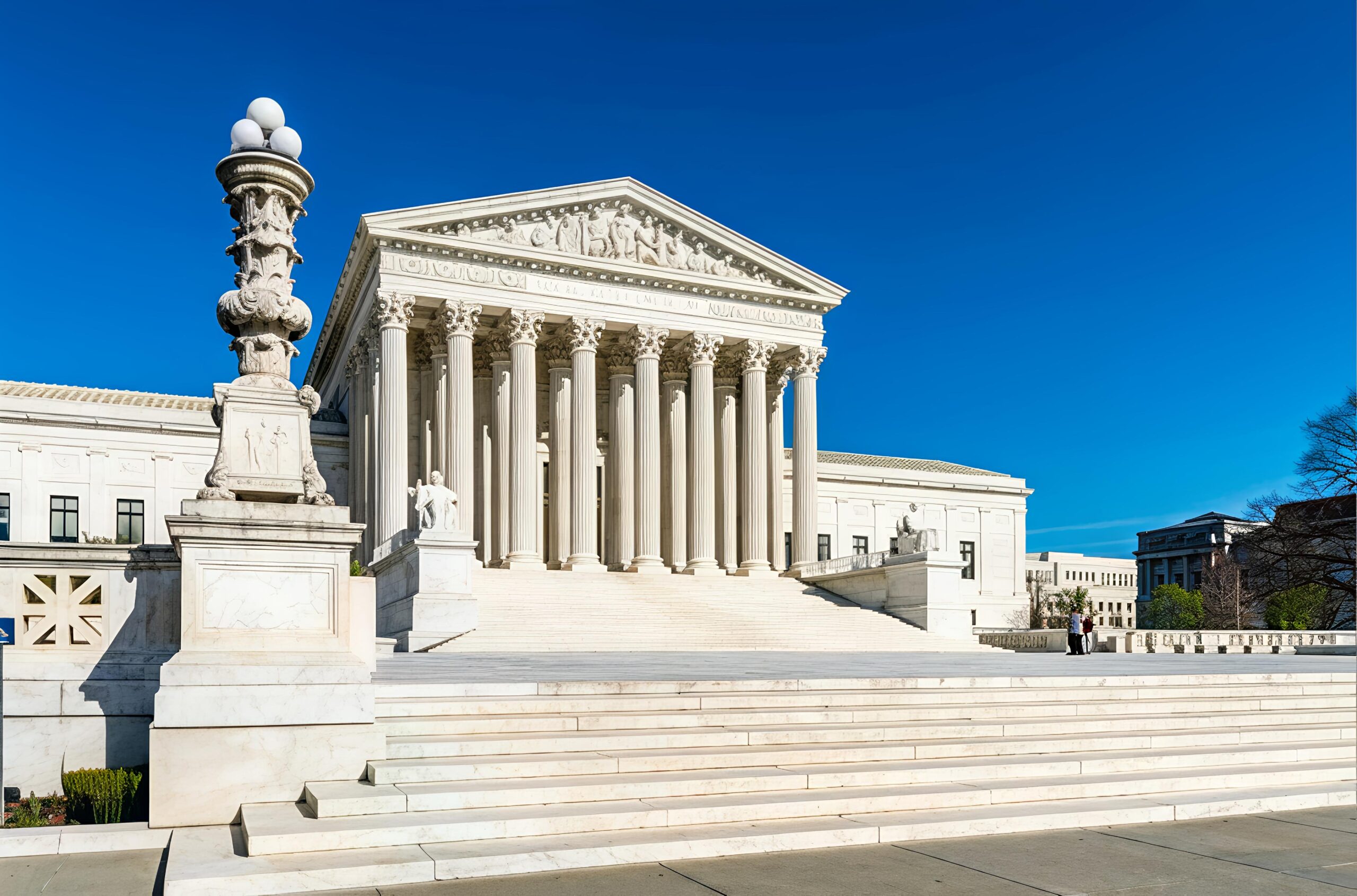
Supreme Court of The United States (SCOTUS) has decided against President Donald Trump’s Executive Order to end birthright citizenship for all born in the United States and upheld the 14th Amendment.
In a 6-3 decision, Chief Justice John Roberts delivered the opinion of the Court, in which Justice Sonia Sotomayor, Justice Elena Kegan, Justice Amy Cony Barrett, and Justice Ketanji Brown Jackson, concurred whereas Justice Brett Kavanaugh filed an opinion concurring in the judgment and dissenting in part. Justice Clarence Thomas, Justice Neil Gorsuch and Justice Samuel Alito filed dissenting opinions.
Chief Justice John Roberts observed-
“Citizenship, then and now, was the right to have rights—to freely participate in our political community. The Framers of the Fourteenth Amendment extended that promise to “every free-born person in this land.” We keep that promise today.”
President Donald Trump’s Executive Order
On January 20, 2025, President Trump issued Executive Order No. 14160, titled Protecting the Meaning and Value of American Citizenship. The order provides that children born in the United States of parents who are unlawfully or temporarily present here are not “subject to the jurisdiction” of the United States—and thus do not qualify for citizenship under the Fourteenth Amendment or the Immigration and Nationality Act (INA), which uses the same language.
Several parents filed suit, some in the name of their children, arguing that the Executive Order violates the Fourteenth Amendment and the INA.
The District Court agreed, provisionally certified a nationwide class of children who would be denied citizenship by the Order, and preliminarily enjoined the Order’s enforcement.
Supreme Court’s Decision
The Supreme Court was examining the following question presented before it-
Whether the Constitution guarantees citizenship to children born in the United States of parents who are unlawfully or temporarily present in the country?
Under the Citizenship Clause of the Fourteenth Amendment, “[a]ll persons born or naturalized in the United States and subject to the jurisdiction thereof, are citizens of the United States and of the State wherein they reside.”
The Court began by explaining that the Citizenship Clause must be understood in light of its historical context, from the English common law to the widespread condemnation of the US Supreme Court’s decision in Dred Scott v. Sandford, 1857.
The story of citizenship in the United States begins with the English common law. Before the Revolution, the American colonists—like all in the British Empire—were considered subjects of the sovereign.
Under the English common law, children “born within the [sov-ereign’s] dominions” owed a natural “allegiance” to the sovereign who protected them at birth, regardless of how “momentary and uncertain” their presence. Such children were therefore “natural-born subject[s].”
The same rule applied to children born of parents subject to expulsion. The rule’s exceptions were narrow: children born in lands the sovereign did not control, children born in areas temporarily outside the sovereign’s control, and children of foreign ministers (by a fiction of extraterritoriality).
This common law of citizenship—known as jus soli, or right of the soil—crossed the Atlantic and prevailed in “each and all of the states” after American independence.
Chief Justice Roberts noted that in Dred Scott v. Sandford, the Court departed from the common law and adopted the view that blood, not soil, determined citizenship; it held that those descended from slaves could not be citizens. The decision was met with shock.
The common law “made no distinction on account of race or color.” But the slave States did, Chief Justice Roberts wrote. He highlighted some of the opinions delivered in the Southern States.
“As the Civil War approached, more and more Southern States sought to deny citizenship to black Americans—and openly rejected the common law to reach that result. It was “not the place of a man’s birth” that made him a citizen, these States said, “but the rights and privileges he may be entitled to enjoy.” On that view, “[t]he prejudice . . . of caste” was “unconquerable.” Not even emancipation could “confer citizenship,” these States held, because free African Americans still suffered from “social and civil degradation” based on “the taint of blood.” With the common law abandoned, almost 500,000 free black Americans in the South were left little more than “strangers.”
Chief Justice Roberts wrote that the odious decision of Dred Scott v. Sandford, the Supreme Court then imposed the Southern States’ beliefs onto the Nation.
Court also referred to Lincoln-Douglas debates for further context-
“In the lead-up to the now-famous Lincoln-Douglas debates, Abraham Lincoln explained that the promise of liberty and equality in the Declaration of Independence “was held sacred by all, and thought to include all.”
Lincoln expressly and intentionally linked the fate of Black Americans and immigrant groups (“among us perhaps half our people who are not descendants at all” of the Founders), and noted that the Nation’s future hinged on a universal definition of citizenship that excluded neither. He explained that the Declaration’s promise that “all men are created equal” was the “electric cord . . . that links the hearts of patriotic and liberty-loving men together,” regardless of race or descent.
The case was made. First, there was war. And then, the delegates’ (and Lincoln’s) universalist view of citizenship made its mark on the Constitution.”
Author: Nitish Kashyap